Start with a decision.
Can your team connect relevant attacker activity to your organization, inspect the evidence, and take a useful next step? Build your evaluation around the sequence.
- Is this relevant to our organization?
- Can we inspect the evidence behind it?
- Can our team act on it in its own workflow?
In this guide
Evaluating intelligence starts with a practical question: does this help us make a better security decision? This guide explains what Intel6 does, where it fits, what to look for in a demo, and how to judge a proof of concept using your own assets and workflows.
Follow a relevant signal all the way through: what was observed, why it belongs to your organization, what it means, and who can act on it. This is the thread to keep in view as you evaluate.
1. Understanding Intel6
1.1 What is Intel6?
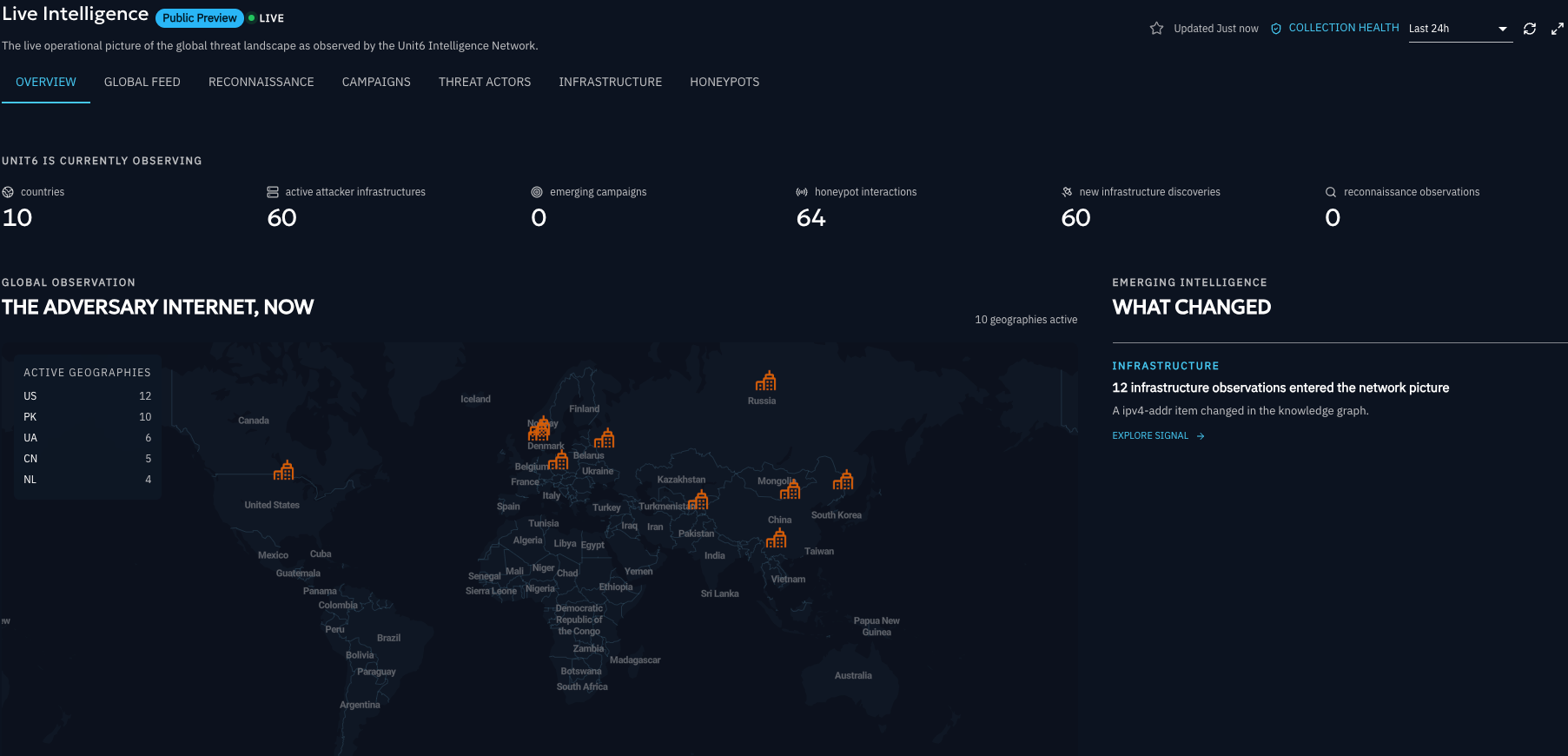
Intel6 is Unit6’s preventive intelligence platform. It brings together adversary activity, identity exposure, external attack-surface context, brand abuse, vulnerability intelligence, and supplier risk to help teams understand which threats matter to their organization.
The useful output is a specific decision: investigate this access path, secure this identity, review this supplier, or validate this exposed system. During a demo, choose one finding and ask to see the evidence and organizational connection behind it.
1.2 How is it different from a threat-intelligence feed?
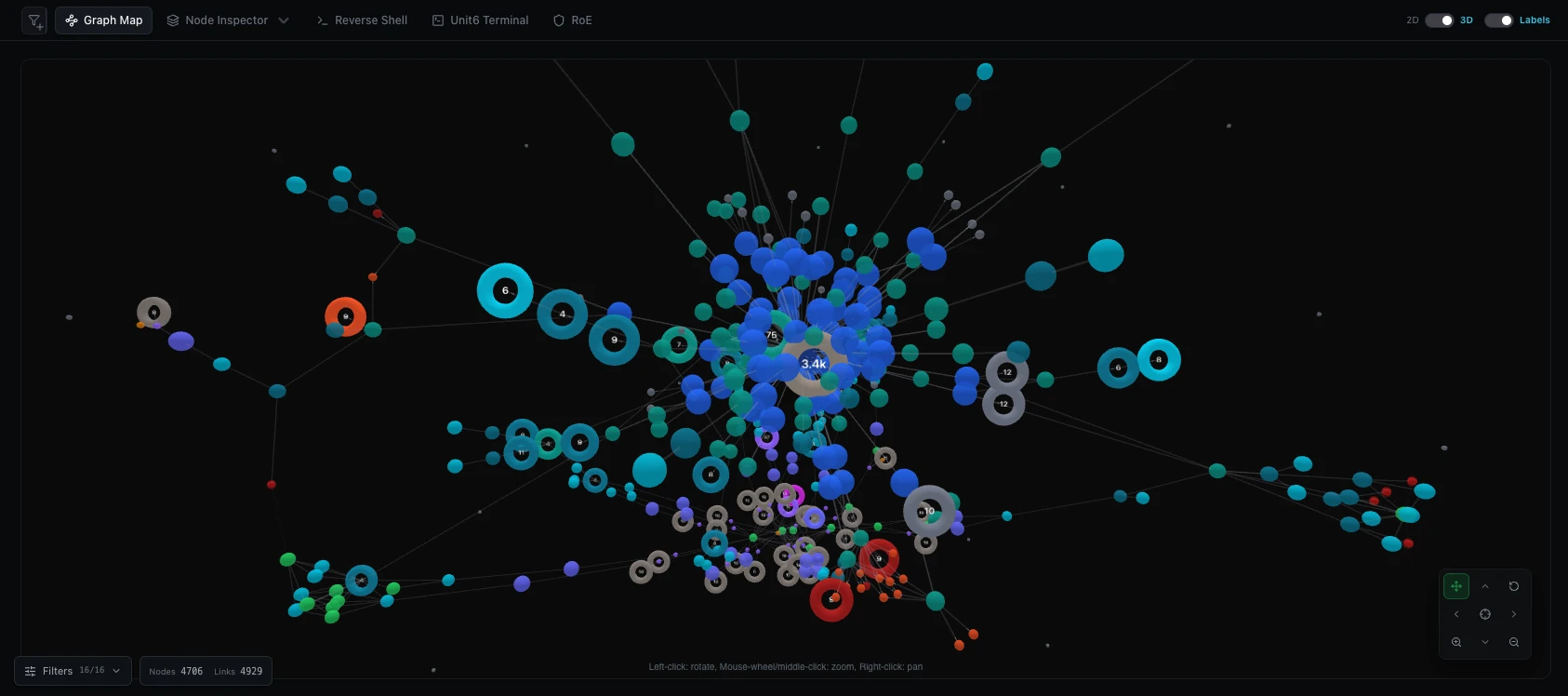
A feed can tell you whether an indicator, vulnerability, or campaign exists. Intel6 connects collected intelligence with your domains, IP space, identities, technologies, subsidiaries, and other agreed monitoring terms. Its Watcher Intelligence Network adds visibility from inside adversary environments alongside other collection sources.
Evaluate the difference with an example you can inspect. Look for source context, timing, relevant assets, and the reasoning behind the alert. The number of indicators alone will not tell you whether your team can make a better decision.
1.3 Do we need Red6 as well?
No. Intel6 and Red6 can be used independently. Intel6 helps answer what attackers are doing and why it matters to you. Red6 tests whether a relevant attack path can work within an authorized scope.
If your immediate need is intelligence, evaluate Intel6 on its own. If a finding raises an exploitability question, you can add a separate validation objective. The Red6 evaluation guide explains how to assess the validation part of the workflow.
2. Platform fit and customer examples
2.1 When is Intel6 a good fit?
Intel6 is worth evaluating when your team needs to connect external threat activity to an identity, asset, business unit, or supplier. Common starting points include exposed access, targeted adversary activity, brand impersonation, and prioritizing external vulnerabilities with threat context.
Start with the gap you want to close. An organization with an established intelligence program may test incremental visibility. A smaller team may focus on whether it can investigate and act on a few important findings without adding another daily queue.
2.2 Who should take part in the evaluation?
Include the people who will use the evidence and own the next action: a CTI or SOC analyst, an identity or vulnerability owner for the chosen use case, and the technical owner of the receiving tool. Bring the security leader into the outcome review.
Give the evaluation one accountable owner. The owner should coordinate assets, access, integrations, and the final decision. A useful finding can still sit idle when nobody owns the handoff.
2.3 What do documented customer examples show?
In Unit6’s healthcare case, intelligence revealed valid portal credentials, the matching MFA secret, and evidence access had been tested. The organization disabled the access path before ransomware deployment or patient data exposure. In a technology case, Unit6 identified two nation-state intrusion paths in a file-transfer environment before internal alerts had detected the activity.
These examples show two different outcomes: acting before the next attack stage and discovering an intrusion already in progress. Read the linked stories for the evidence and response in each case, then choose the outcome your own evaluation needs to demonstrate.
Customer stories Anonymized, with documented outcomes
 Healthcare
Stopped Ransomware Before Impact
Stopped before impactRead the case study Technology
Exposed Nation-State Activity Early
Intrusion found before internal alertsRead the case study3. Coverage and organizational scope
3.1 What can we monitor?
Intel6’s product coverage spans threat, identity, brand, external attack surface, vulnerability, supply-chain, and malware intelligence, with a research environment for investigating connected evidence. The product page walks through these areas.
Match the coverage to the package you intend to buy. Agree on your root domains, IP ranges, relevant brands, subsidiaries, and monitoring terms. Then review discovered assets together so parked domains, shared infrastructure, or unrelated companies do not distort the evaluation.
3.2 How should we evaluate identity and brand intelligence?
For an identity finding, inspect how the exposed account is linked to your organization, what evidence supports the finding, when it was observed, and what your identity team should do next. Review sensitive evidence with appropriate access restrictions.
For brand abuse, use a concrete lookalike domain or impersonation example. Check whether the evidence distinguishes suspicious infrastructure from confirmed abuse. If social accounts, executive impersonation, takedowns, or leaked-data monitoring matter to you, confirm their exact coverage, delivery model, and limits in the proposed package.
3.3 Can we include suppliers and subsidiaries?
Supply Chain Intelligence extends the evaluation to relevant third parties. Choose a small set of critical suppliers or subsidiaries and explain why each matters to your organization. Assess whether a finding provides useful context for the relationship and a clear owner for follow-up.
External intelligence about a supplier is different from permission to test its systems. Any active validation needs its own authorized scope. Keep the intelligence review and testing permissions explicit.
4. Collection, evidence, and prioritization
4.1 What is the Watcher Intelligence Network?
The Watcher Intelligence Network is Unit6’s collection capability inside adversary environments. It contributes visibility into attacker activity alongside open, deep, and dark-web sources, partner intelligence, telemetry, and external asset context.
During the evaluation, ask the team to explain the evidence supporting a finding and the source context it can share. Some collection detail is sensitive. You should still be able to understand the basis for an assessment and its limits, without needing access to protected collection infrastructure.
4.2 How do we judge whether an alert matters to us?
Look for a chain you can follow: observed activity, the relevant entity, the connection to your organization, and the recommended next step. A campaign aimed at your sector and evidence of access to your own portal call for different responses.
Ask the analyst to separate what is observed from what is inferred. A version match, a broker’s access claim, tested credentials, and a confirmed intrusion are different kinds of evidence. The priority and language should reflect the difference.
4.3 What should we check about noise and false positives?
Review a representative sample with your analysts. Record which findings were relevant, which duplicated existing work, which required clarification, and which led to a useful action. Investigate incorrect asset associations as well as questionable threat claims.
Keep the review outcome attached to the finding. This gives you a practical way to compare quality and analyst effort with your current process. Set a target with your team rather than borrowing an alert-reduction percentage from another environment.
4.4 How much advance warning should we expect?
Warning periods vary by organization and threat. Some intelligence can reveal preparation before an attack. Other findings expose existing access or an ongoing intrusion.
Check the timeline of each example: when the activity happened, when it was collected, when it became relevant to your organization, and when the team could act. A newly delivered alert does not necessarily describe newly started activity.
5. Integrations and response workflows
5.1 How does Intel6 fit our existing tools?
The integrations catalog includes SIEM, SOAR, identity, ticketing, collaboration, and custom API or webhook workflows. Examples include Microsoft Sentinel, Splunk, Jira, ServiceNow, Slack, Microsoft Teams, Tines, and Torq. Check the listed connection method and confirm the scope of the particular integration you need.
Make one connection part of the evaluation. Follow a finding into the receiving tool and inspect the fields, evidence link, timestamps, ownership, and handling of updates. For an API workflow, request documentation and test the actual response your application will consume. A connector logo is only the starting point.
5.2 Can we control what happens after a finding?
Intel6’s operating model supports human review and configured automation. Decide which findings should notify someone, which should create work, and which may trigger an approved response. Confirm the permissions and behavior of your chosen integration before enabling actions.
For example, detecting exposed credentials, validating an identity exposure, and resetting an account are separate steps. Walk through the approval boundary and audit trail for each step your team plans to use. Measure whether the workflow reaches the person who can resolve the issue.
6. Onboarding, data, and security review
6.1 What do we need to get started?
Intel6’s external intelligence workflow starts with agreed organizational identifiers and asset scope. The initial external visibility does not require installing a sensor across your internal environment. Additional integrations may need API access, service accounts, or permissions.
Prepare a short asset list, one priority use case, an evaluation owner, and a technical contact for the integration. Review the first asset associations before judging coverage. Agree on the evaluation window around the time your reviewers can participate.
6.2 What should our security and procurement teams review?
Ask Unit6 for the current security and data-handling documentation relevant to your proposed deployment. Review hosting location, retention, access controls, tenant separation, evidence handling, subprocessors, deletion, and contractual requirements with the responsible teams.
Check who can view sensitive identity or intrusion evidence and what leaves Intel6 through an integration. Confirm the specific assurances your organization requires in the current documentation and agreement.
7. Proof of concept, pricing, and ROI
7.1 What should an Intel6 proof of concept include?
Use a scope matching the intended package. Choose one or two questions, such as whether Intel6 reveals meaningful exposed-access evidence or improves the context available for a critical supplier review. Agree on assets, modules, integrations, reviewers, and a decision date before access begins.
Include the whole workflow: review a relevant finding, inspect its evidence, send it to the appropriate tool or owner, and record the action taken. If no relevant activity appears during the window, review coverage and representative historical examples separately. Silence alone cannot prove complete coverage.
7.2 How should we measure value?
Compare the evaluation with your current process. Track relevant findings, new information, time spent investigating, successful handoffs, and completed actions. Ask whether the evidence changed a priority or enabled an action your team could explain to a security leader.
Use this scorecard to agree on what success looks like. These are evaluation measures to collect in your environment, rather than promised customer averages.
| Evaluation check | Evidence to collect | Decision it supports |
|---|---|---|
| Organizational relevance | Reviewed asset associations and analyst assessment of each sampled finding | Does the intelligence belong in our queue? |
| Incremental visibility | Findings compared with the sources and alerts we already use | What useful information does Intel6 add? |
| Evidence quality | Source context, timing, observed facts, and stated uncertainty | Can our team trust and explain the assessment? |
| Analyst effort | Time to understand the finding and identify the next action | Does this improve our existing workflow? |
| Operational handoff | One tested integration and an accountable response owner | Can the evidence reach someone who can act? |
| Outcome | Documented decisions and completed actions during the evaluation | Is the value sufficient for our intended scope? |
7.3 How is Intel6 priced?
Use the pricing page to explore package options and an indicative planning estimate. Relevant inputs include organizational size, selected intelligence modules, coverage, and contract choices. Confirm final scope and commercial terms in a proposal.
For a fair decision, evaluate the modules you plan to purchase and the work they will support. If consolidation is a goal, identify the exact workflows and contracts likely to change, including any migration or parallel-running effort.
8. Planning your demo
8.1 What should we ask to see in a demo?
Bring one question you need answered. Ask the team to trace a representative finding from collection context to organizational relevance, show the evidence, and follow the next action into your workflow. Use approved demonstration data or explicitly agreed customer data.
For an exposed-access use case, this means understanding the affected identity, the access evidence, the timing, and the response owner. For a supplier use case, it means understanding the relationship, the relevant threat, and the decision your team would make.
8.2 What happens after the demo?
Agree on whether there is a gap worth testing, who owns the evaluation, and what evidence would support a purchase decision. A scoped POC should have clear coverage and commercial boundaries, with enough time for your technical and security reviewers.
Book an Intel6 demo to work through your priorities with the team. If your main question is whether an attack would succeed, continue with how to evaluate Red6.